Small Parenting Habits That Quietly Damage Peace at Home (And How to Fix Them)
Why Some Homes Feel Calm — And Others Feel Constantly Tense
There are some homes which exude serenity despite any kind of disorder.
There may be dirty plates in the sink. Toys may have been strewn all over the floor. There may be stress due to tight schedules.
But there is an element of comfort in the conversations between the family members. There is safety in the emotional environment. There is peace amidst turmoil.
But then, there are also those homes that seem to always live under tension.
Simple discussions soon lead to quarrels. The parents feel emotionally drained. Their children are either highly reactive or defensive or distant. Small matters become big emotional upheavals.
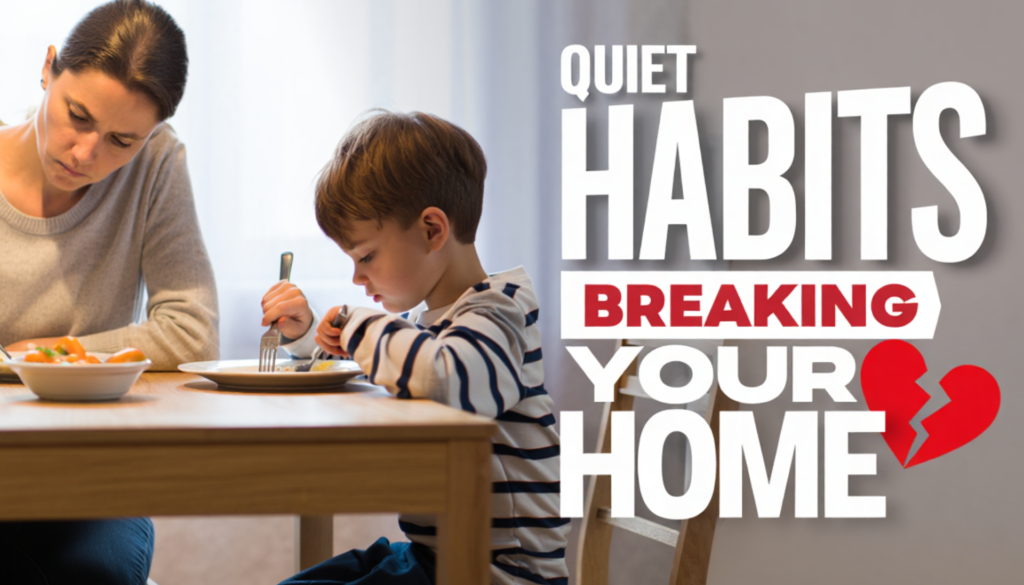
And often, the Small Parenting Habits That Quietly Damage Peace at Home are not necessarily grand or glaringly apparent.
These are habits done on a daily basis that gradually transform the emotional atmosphere in the household.
Tiny actions. Slight changes in tone of voice. Patterns in emotions. Stress reactions that become the norm after some time.
All of these can happen to many well-intentioned parents subconsciously.
Not because they are negligent parents. But rather because parenting is such an exhausting job where they have to juggle a lot of other responsibilities aside from raising emotionally stable kids.
When parents try their best to get through the day and at the same time nurture their kids, the end result will be exhaustion which often results in an absence of peace in the household.
This is not a guilt trip. Nor is it meant to shame parents into becoming more than what they are.
Instead, this article is designed to help readers understand the small parenting habits they do on a daily basis which contribute to the creation of a particular emotion at home, and how they could transform those into positive actions instead.
Peaceful homes are not built overnight.
When Every Conversation Becomes Correction
Many parents fail to see just how much they keep correcting their children.
• “Stop doing that.”
• “Sit properly.”
• “Don’t be noisy.”
• “You are not doing it right.”
• “Why can’t you listen?”
It goes without saying that kids require guidance. And parenting is all about teaching, directing, and correction.
However, for some families, it gradually turns out that correction is the core way of communication.
Children feel as though they have to apologize for everything they say and do. At times, parents get so absorbed in behavior correction that they forget about building connections.
A kid who is regularly corrected by his or her parents starts subconsciously feeling: “I disappoint others.”
This is one of the most overlooked common parenting mistakes impacting family harmony.
The children react in a defensive manner. The parents feel frustrated. Everyone gets emotionally exhausted.
Slowly, even regular interactions start becoming difficult.
What most parents do not realize is that children need emotional support as much as they need discipline.
Children who hear nothing but criticism stop feeling secure enough to share. This does not mean that the parents have to turn a blind eye to misbehaving children.
What it means is that balance is needed. Children must not feel judged all the time; instead, they must feel encouraged.
One thing that will bring harmony back into the family is that of recognizing positive behavior in the child.
Rather than scolding the child for doing something wrong, appreciating them for doing something right will make a world of difference.
• “Thank you for lending a hand.”
• “I noticed how you tried your best.”
• “I’m proud of how you handled yourself.”
• “That was such a kind gesture.”
Small gestures like these change the emotional ambience of the house completely. Children instinctively seek the emotional energy they get from others the most. And harmony happens when children feel appreciated for what they do well.
When Everything Becomes Yelling
Some parents are not angry.
They are tired.
By the tenth repetition of the same direction, yelling seems like a more efficient method than calm conversation.
At first, parents might view yelling as temporary. However, eventually, without even realizing it, yelling becomes their family’s primary mode of communication. Once yelling becomes normal for the household, the peace is gone very fast.
Kids start reacting emotionally to things before even talking. Parental frustration grows because kids become less responsive to any attempts at calm communication. Emotional stress in the house increases.
Many parents resort to yelling out of desperation of being heard. However, children tend to shut down if fear becomes the dominant emotion in the household.
A child brought up under permanent yelling can become: Anxious, emotional, withdrawn, defensive and afraid to make mistakes.
Yelling, even non-abusive, changes the emotional climate of the house. Kids soak up emotional energy much better than their parents think.
The issue is not just the amount. But rather the emotional unpredictability. Kids tend to feel secure in environments where emotions are stable and calm.
That is why yelling remains one of the most common mistakes parents make when it comes to raising kids.
No one is perfect, no matter who they are. What matters is being aware of your emotions.
One of the best parenting practices includes learning how to take some time before reacting emotionally.
Not every stressful situation needs an instant response. In some cases, just reducing your voice can change the whole course of a discussion.
Emotional calmness is contagious and affects others faster than many people can imagine. Eventually, children will learn emotional management from the way adults deal with stressful situations. Stress-free families are not stress-free because they don’t have problems.
But they are stress-free because they know how to handle conflicts with emotional stability.
Never Saying Sorry to Children
Parents from many generations were brought up to believe that apologizing to children compromises authority.
Therefore, despite knowing they have responded inadequately, parents choose silence.
However, children do not forget such experiences.
• They remember being humiliated.
• Disregarded.
• Misinterpreted.
• Wrongfully scolded.
When parents never apologize, children silently internalize one harmful idea: “Growing up means never acknowledging mistakes.”
It impacts the atmosphere in families more significantly than people would imagine. The emotional climate becomes very inflexible.
Children refrain from communicating their emotions since they know parents will never hear them out.
Emotional distance builds up between parents and children over time. Saying sorry does not weaken parents’ position in any way.
On the contrary, it makes parents more authoritative. An apology by parents can teach their kids:
• responsibility
• humility
• emotional maturity
• empathy
• effective communication
One apology is better than all the long lectures to solve emotional conflicts quickly.
• “I should not have screamed at you like that.”
• “I got angry but could have managed myself.”
• “Sorry, I wasn’t listening properly.”
Emotionally safe atmosphere gets created within the family. Kids do not expect perfect parents from them. They expect emotionally honest parents.
But sometimes those who make mistakes and try to mend things later are the families with peace amongst themselves.
Comparing Siblings Quietly Damages Relationships
Comparison usually begins unintentionally.
• “Why can’t you be more responsible like your sister?”
• “Your brother listens more attentively.”
• “She is smarter and gets better grades.”
• “He doesn’t talk back.”
Many parents use comparisons in order to motivate their children. However, the effect of comparison is quite opposite.
A feeling of competition rather than personal development emerges in children.
One of the children develops feelings of insecurity. Another one experiences feelings of constant pressure and anxiety caused by necessity to excel.
Gradually tension starts developing in a family atmosphere. The real problem is not just comparing siblings.
The real problem is the emotional message behind it.
Children perceive it like this: “You will be loved more if you succeed more.”
This emotional message harms emotional safety of the family atmosphere. Here is yet another example of a common parent mistake that negatively affects family harmony unconsciously.
Each child is unique and possesses his or her own strengths, emotional needs, personality, and difficulties.
Peaceful parenting acknowledges individuality rather than trying to create competition.
A better way to parent is to encourage personal development rather than competition.
Rather than: “Why can’t you be like your brother?”
Say:
• “I know that you will do better next time.”
• “Focusing on your own development.”
• “You do not have to be perfect for me to be proud of you.”
Such subtle changes in how you communicate allow your children to stay emotionally connected. Furthermore, home will be more peaceful when children are not in constant competition with each other.
Being Physically Present but Emotionally Distracted
One of the most subtle failures of modern parenting is that of emotional absence. It can happen that parents are physically present with their kids all day but emotionally detached through it all.
Cell phones. Occupational stress. Exhaustion. Multitasking.
The distractions of the modern world make emotional engagement harder. Sometimes the children aren’t seeking expensive vacations or perfect parenting.
Sometimes they simply want undivided attention. Children can tell when parents are half-paying attention.
When interactions are constantly disrupted by phones and other devices. Emotional distance is quietly developing in the family. And disconnection often means tension at home.
Why? Because children lash out emotionally when they feel disconnected from you. Many behavioral issues are really connection issues. Kids will get attention however they can get it.
Some by crying. Some by getting angry. Some by withdrawing emotionally.
The greatest form of healing for parents is to create little bits of undivided attention.
Attention doesn’t have to be perfect. It just has to be intentional.
Ten minutes of intentional attention will make a bigger emotional impact on a kid than hours of distracted attention.
Little things that mean a lot include:
• eye contact when talking
• turning the phone off temporarily
• active listening
• asking good questions
• laughing
Peacefulness in the home comes from emotional connection. Emotional connection starts with presence.
Solving Every Problem for Your Child
Loving parents often come to help their children get out of trouble at once.
They solve problems instantly. Fix errors quickly. Keep failure away all the time.
It is done out of love. Parents always try to keep their children away from any form of suffering. However, by solving every problem for their children, they rob them of many chances to build their resilience.
Stress in the household ends up rising since the children become too emotionally dependent on their parents. Children who have never learned to solve any problem independently usually have problems with:
• tolerance to frustration
• emotional self-regulation
• self-confidence
• decision-making
• taking responsibility
Parents themselves become tired because they have to manage their child’s emotions all the time.
Harmony does not appear in the house by getting rid of all difficulties. It arises by teaching kids how to cope with difficulties with confidence and ease.
This implies that one gives children the chance to:
• Experience natural consequences
• Solve problems relative to their age group
• Make mistakes
• Learn coping skills
Confidence is developed among children where parents mentor rather than dictate. This implies that one tries asking questions like:
• “What would you consider helpful?”
• “How will you address this?”
• “What do we learn from this?”
When parents have faith in their children, children are able to develop emotional strength. Emotionally capable children bring about a peaceful home environment.
Punishing Emotions Instead of Teaching Them
• “Don’t you cry!”
• “You’re too emotional!”
• “Get yourself together right away!”
• “It’s not okay for big boys to cry.”
Parents have heard these phrases used against themselves when they were kids. Thus, they use them without thinking about the emotional harm inflicted on their kids.
Discipline is not the issue here. The issue is teaching kids that emotions themselves are taboo.
Kids who grow up feeling emotionally rejected often do not know how to express themselves emotionally.
Rather, their emotions surface through:
• anger
• withdrawal
• anxiety
• emotional outbursts
• aggression
• emotional withdrawal
Peaceful family homes are not emotionless ones. They are emotion-educated ones.
Kids require emotional guidance rather than emotional punishment. When a kid cries, it may not be necessary to punish him.
Sometimes what he needs is emotional guidance. It does not mean condoning rudeness.
Boundaries will always apply. But emotional validation makes all the difference.
Rather than saying: “Stop crying.”
Say:
• “I understand you are feeling hurt.”
• “It is perfectly fine for you to be angry.”
• “We can both calm down.”
Emotional regulation is learned through modeling. And emotional regulation forms the cornerstone of family harmony. Since homes are always peaceful when emotion is valued.
Fighting Aggressively in Front of Children
Every relationship will experience some form of conflict. In and of itself, this does not mean there is something wrong.
Aggressive conflict will produce instability within the household environment. Children are highly sensitive to the energy present between the two people involved.
Even when one thinks children have their attention elsewhere, tension is being absorbed.
• Yelling
• Abuse
• Insults
• Silence
• Hostility
All of these behaviors instill anxiety in children since the home no longer feels like a safe emotional environment.
Children may start feeling: Hyper-aware, Anxious, Withdrawn, Scared, Reactive.
Sometimes children feel responsible for the conflicts at home. The most damaging thing is not for a child to see parents argue.
It is witnessing the breakdown in emotional stability without resolution. Constructive conflict is entirely different.
Constructive disagreement allows kids to learn:
• Communication
• Self-regulation
• Problem solving
• Responsibility
One of the best things parents can teach children is the art of repairing relationships. Kids should occasionally witness parents apologizing and re-establishing connection.
This teaches emotional security. Peace does not mean absence of conflict. It means having emotional security despite the conflict.
Expecting Perfection From Yourself as a Parent
Many parents suffer from secret high levels of stress.
• To always be perfectly patient.
• To raise faultless kids.
• To manage all aspects of their lives without flaw.
And as parents see themselves continuously fall short, emotional exhaustion seeps into the household.
Emotionally exhausted parents tend to be: reactive, impatient, disconnected, exhausted and overwhelmed.
Perfectionism slowly destroys peace by creating persistent internal tension.
Parents that feel guilt-ridden each time they take a break. Parents that feel shameful after losing patience. Parents who fear one parental mistake ruins a child forever.
However, healthy parenting does not hinge on perfection. Healthy parenting requires consistency, repair, and sustained emotional presence.
Children don’t need parents who have never made a mistake. Children need parents who are emotionally available despite mistakes.
Parents need self-compassion too. Resting is important. Support systems matter. Maintaining emotional well-being matters.
Calm parents generally create calm homes. Often, increasing family harmony comes through letting go of parental perfectionism.
Forgetting That Children Learn More from Energy Than Words
Parents pay great attention to instructing verbally.
• “Respect.”
• “Kindness.”
• “Control emotions.”
However, kids learn way more from example.
If parents yell continuously when explaining respect, kids will learn how to yell.
If parents are aggressive with stress, kids will learn aggression.
If parents apologize genuinely, kids will pick up taking responsibility for their actions.
Kids observe emotional energy all day.
They learn about:
• adult behavior in stressful situations
• relationships between people
• conflict resolution
• emotions expression
• self-treatment and treatment of other people
That is why a peaceful home needs much effort put into modeling emotionally.
Perfect parents are not needed. Being aware is vital though because kids learn how people behave emotionally within the family.
One of the most potent questions that can be asked about parenting is:
“What emotional climate am I establishing on a daily basis?”
Neither through perfection,
nor through online image,
nor through parenting trends.
But through my regular emotional practices. Since it is much easier for kids to recall the feeling of home than its state of orderliness.
Final Thoughts on Small Parenting Habits That Quietly Damage Peace at Home
No parent is perfect. All families have seasons of stress, emotional mistakes, fatigue, and tough situations.
There will be times when patience is lacking. Times when parents are simply at their wit’s end. Times when kids push all of your buttons emotionally.
This does not mean that you are failing as a parent. Here’s the thing: many of the Small Parenting Habits That Quietly Damage Peace at Home often happened unknowingly.
It’s not because the parent doesn’t love the child. Rather, it’s because stress, fatigue, emotional hurt, and pressure gradually mold communication in the family.
- Perfect parents do not raise peaceful homes.
- Peaceful homes are created by parents who can stop, think, apologize, learn, and try again.
- Peaceful homes are built through emotional awareness.
- Understanding how tone influences children.
- Understanding how emotions impact the energy of the household.
- How those small daily occurrences build the overall atmosphere of a home.
It is not about having perfect parents. Children simply require emotionally safe relationships.
- Without humiliating the child.
- Without rejection from their parents.
- Establishing boundaries without fear.
- Expressing love without instability when things get tough.
Sometimes, the simplest actions on the part of parents have the greatest impact emotionally.
- A little less anger.
- Speaking calmly.
- An apology.
- Just a few minutes of attention without distractions.
- Having an emotionally safe conversation.
These small events might appear insignificant at times. But overtime, these events build the peace within the family. In some cases, these are the moments that children will always remember.
Let’s talk 💛
What would be your choice regarding what makes family harmony?
Do you remember any little thing that changed the mood at home entirely?
Leave your thoughts and comments below, and maybe one parent will relate to you and feel supported.
Also, if you enjoyed reading this post, share it to encourage others.