Real-Life Parenting: What Actually Works at Home
What I Never Knew About Parenting Was Just How… Personal It Would Be
There’s that kind of parenting that everyone talks about before they start parenting. They talk about being patient. Being present. They describe the parent that is able to teach their kids calmly without losing their cool. Someone that will raise kids that don’t have emotional issues thanks to them.
But then the real world of parenting comes in and you quickly realize: Parenting isn’t just raising your kid. You’re exposing yourself in the process.
Your patience. Your triggers. Your habits. All those ways you were brought up and that you thought you had left behind somehow pop back up.
Parenting isn’t just about what works best for kids. It’s about what also works when you’re trying as hard as they are.
Tuesday That Made Me Think Differently As A Parent
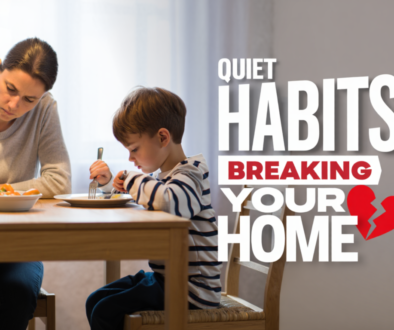
It was no big deal. Nothing out of the ordinary occurred at all. I was getting something done on my mobile device—not in a hurry but something I had to get through before doing something else.
They kept conversing with me. But they weren’t asking for anything. They were sharing random bits of information with me. Ideas they had in their minds which had no clear direction.
And, I remember saying: “Wait…I’m busy.” A few times. Until finally, they got quiet.
And, this is where I realized what was happening—because I did not realize it was happening at the time. I mean, there was no drama or sadness. Only a little quiet.
That evening, they were unusually silent. And it was then that I became acutely aware of something: That this wasn’t about that one particular moment in time… But about all the other “not now” moments I ignored. Because, it was the first time I understood that parenting was not made up of the big choices.
What Really Works (Even When You’re Not At Your Best)
Now, let’s face it—I don’t always get it right. Sometimes, I’m still saying, “later.” Sometimes, I rush. Sometimes, I’m not listening to my child. However, some lessons have come to pass—not necessarily because of perfection but through experience.
1. Listening When You Least Expect It Is More Important Than Perfect Timing
Your child isn’t going to give you the chance to pick the right time. No, it never will be convenient.
It will happen: When you’re cooking. When you’re tired. After sitting for a very long time. When you’re doing anything else. And there comes a temptation to put it off: “Okay, we can do it later.” And what I realize becomes awkward:
If they see you putting it off all the time, they won’t bother anymore. And so, what I’ve learned, though not perfectly executed, is that it helps to pause.
Even if it’s only: Putting down my phone. Making eye contact Saying, “Tell me”
Not an hour, sometimes just a minute. For them, it’s like: “You matter right now.”
2. Your Child Doesn’t Always Need the Right Words—Tone Comes First
When I started, I paid close attention to saying the “right” words. Saying things in a clear manner. Teaching morals. Ensuring each situation teaches a lesson.
However, children don’t listen for words. They listen for tone. Children will not hear your words if there is frustration in the tone. Instead, they pick up on the emotion. As I mentioned above, the same words can mean two different things depending on your tone.
That was when it hit me: Sometimes it doesn’t matter what you say. It matters that your child is comfortable hearing it.
3. The Times When You Want to Move On Are the Most Important Times
Tantrums. Refusal. Emotional breakdowns. They’re the times that parents want to move past. Sure. I get it. They’re taxing.
Here’s what I’ve observed: The harder I try to make those times go faster, the longer they drag on. Conversely, the slower I move through those times, the faster they seem to pass.
Not instantly or magically. Just more smoothly. Like kids have some kind of radar for when you’re trying to “close down” the moment compared to when you’re really there. And then they respond in kind.
4. You’re Going to Find Yourself Repeating Yourself a Lot More Than You Expected To
When you do a good job at explaining yourself, you assume that it should be remembered. Wrong assumption!
The same thing is going to be repeated: On manners, On routines, On behavior.
Again, and again, and again.
It seems like nothing is sticking at first, but eventually there will come a time when you’ll have to hear yourself in your own child’s voice. All of those months of repetition were slowly taking root after all.
5. Being There vs. Being Present Is Two Different Things
For a long time I believed that just being present physically would be enough. The same space, the same room – that’s gotta count, doesn’t it?
But children know when we are: Partially listening, Distracted, Elsewhere mentally. But children also understand when we really are there for them. Sometimes even just for five minutes. Those minutes mean more than an hour of distracted time ever will.
It was a harsh realization to come to terms with. But the thing is, it isn’t a matter of time; it’s a matter of presence.
6. Some Days, “Good Parenting” Seems Very Simple
Then there are days when none of that matters. You are exhausted. They are exhausted. Everything seems wrong.
On days like those, good parenting is not about: Scheduling activities. Having meaningful talks. Giving perfectly thought-out answers.
It is about: Making sure they are fed. Keeping them safe. Getting through the day without everything going to hell.
And that is good enough. That was hard for me to learn. Because we are so accustomed to comparing our days to perfect days.
7. It Hits You Later How Powerful Your Words Are
The toughest thing about being a parent is that there are no immediate results. It’s not like what you do or say will have an instant effect on your child.
But suddenly, out of nowhere, it happens. Some words you used come up. Something about dealing with frustration.
A little action they’ve picked up. And you realize that all this while… They were watching everything you did!
8. You Can’t Control Everything—and Trying To Will Exhaust You
Eventually, I understood that I was attempting to control too many things: Everything you do. Every response. Every result! It was exhausting.
Because children weren’t supposed to be controlled like that. They were supposed to be directed. And there was a distinction between the two.
Directing leaves space for: Errors, Education, Development. Controlling seeks to remove all of those things—thus increasing friction.
9. It Is More Important How Your Day Ends Than How It Began
Some days start out tough. Everything is off, everyone is on edge, and nothing goes smoothly. However, there is one little thing that I have learned that makes a world of a difference: It’s not how your day started that matters, but how it ended.
After having a bad day, it’s important to have at least this brief moment of: Sitting down, Discussing, Good nights said thoughtfully.
10. But Not Everything is Smooth All Along
This point probably hits the nail on its head. Even when everything seems fine, there will always be doubts lurking inside of you.
Aren’t I doing enough?
Or am I just overdoing everything?
Is what I’m doing really correct?
However, I have come to view things in a different light. This does not mean you are messing up. It means you are observing yourself.
The Silent Truth about What Really Works
To boil it all down to its most basic form: Parenting methods that work aren’t showy. They’re not very impressive on the surface.
They’re comprised of little things: Waiting when you can ignore, Listening when you are tired, Trying again when you make a mistake, Doing the right thing even when it’s boring,
And repeating these things over and over.
Not flawlessly, But consistently enough.
Before We Go
One thing that I have learned, without a doubt, is this: Parents are doing better than they know. We simply miss the subtle advancements that take place in the midst of the chaos.
If today felt hectic and frustrating to you, it doesn’t necessarily mean that you haven’t accomplished anything worthwhile. On the contrary, it could very well be that you’ve been right in the middle of something worthwhile.
That’s where most of parenting takes place anyway. If you’d like, you could let me know what a recent little achievement of yours was. Not necessarily the big ones; the little things that really happened.