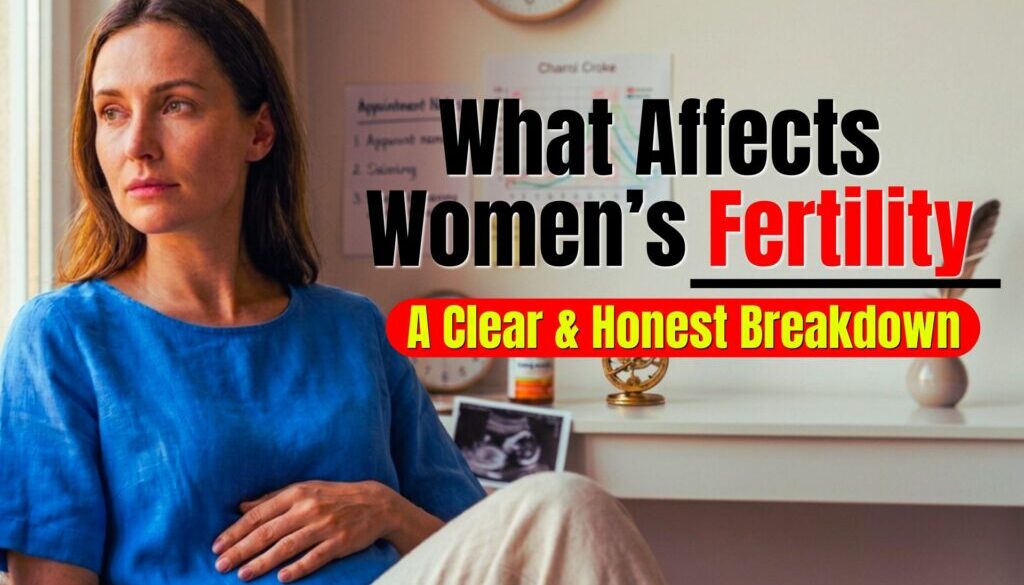
What Affects Women’s Fertility? A Clear, Honest Breakdown
It feels like there’s something isolating about talking about fertility.
Conversations about pregnancy happen all the time, but no one talks openly about fertility. It seems like people always go to one of two extremes – either they think you’re running out of time starting right now, or your fertility issues will just go away as long as you “just relax,” “drink some herbal tea,” or “stop stressing yourself out.”
That’s often not how things play out.
Women have been worrying about their fertility well before asking a doctor about it. For some, it’s because they experience painful periods and know they aren’t supposed to be “that way.” For others, it’s due to feeling exhausted, having irregular periods, and dealing with hormones. For others still, pressure from family and friends or social media posts make everything harder.
The truth is that women’s fertility is deeply personal, medically complex, emotional, and influenced by far more factors than most people realize.
That is why understanding What Affects Women’s Fertility? A Clear, Honest Breakdown matters so much. Not to create fear, but to create awareness. Not to shame women, but to help them make informed decisions with compassion for themselves.
Because fertility is not a moral test. It is not proof of womanhood. And struggling with it does not mean someone failed.
Fertility Is More Complex Than People Think
The primary myth regarding fertility is that it’s either “a snap” or “it will never happen.” But in truth, fertility is a broad spectrum ranging from many influences, including biological factors, hormonal influences, lifestyle choices, illnesses, genetic disposition, age, environment, and timing.
While some women conceive easily without much trouble, others have difficulty conceiving even after making all the “right” moves. Some become pregnant unexpectedly while others never have any issues.
There is no magical solution to conceive nor one explanation behind difficulties conceiving. This is important to remember because myths create guilt where it doesn’t belong.
Age and Fertility
The Conversation That Often Becomes Fear-Based.
Age is always the first issue raised when talking about What Affects Women’s Fertility? A Clear, Honest Breakdown. Yet it is often brought up in ways that only cause hysteria rather than enlightenment.
Age does impact fertility. Nevertheless, the discussion can be easily overstated in cyberspace.
Eggs are formed during the female’s fetal life. Both their number and quality decrease slowly throughout her lifetime. Changes in fertility start to become noticeable in the 30s and continue decreasing with age, particularly past the mid-30s.
Nevertheless, decreased fertility is not a rapid process.
It is possible for women to get pregnant naturally in their 30s and even 40s. Data reflect overall population statistics, not an individual’s future prospects. There are a lot of factors that influence a woman’s fertility path aside from age.
What influences women’s emotions is not just biology, but also pressure.
The “biological clock” discussion can be incredibly stressful for women who have other obligations such as work, finances, relationships, or even worries about being a mother. They may feel pressured to make choices before they want to or may feel embarrassed that they’re not “ready.”
The truth is much more sympathetic than the internet would have you believe:
age does matter, but it is merely a small aspect of a much bigger picture.
Hormonal and Reproductive Health Conditions
Another major factor in What Affects Women’s Fertility? A Clear, Honest Breakdown is hormonal and reproductive health.
Many women live with symptoms for years before realizing something may be affecting fertility.
1. PCOS (Polycystic Ovary Syndrome)
PCOS is one of the most frequently occurring hormonal disorders associated with infertility. PCOS can make it difficult for women to ovulate. Signs and symptoms include:
• Abnormal menstrual cycles
• Acne
• Changes in weight
• Hairiness
• Inability to ovulate
It ranges from extreme cases to those where the woman hardly notices anything.
2. Endometriosis
When the tissue that is like the uterine lining starts growing outside the uterus, endometriosis occurs. The consequences include:
• Periods that are extremely painful.
• Painful intercourse.
• Digestive problems.
• Pelvic pain.
• Problems related to fertility.
Women usually suffer from the pain for several years, being told by others that it’s normal.
3. Thyroid Problems
The hormone from the thyroid regulates metabolism, ovulation, menstruation, and reproduction. Hypothyroidism and hyperthyroidism can both impact fertility.
These are some signs that are often overlooked by many women:
• Severe tiredness.
• Thinning of hair.
• Weight gain or loss.
• Difficulty concentrating.
• Menstrual irregularities.
• Fibroids and Irregular Ovulation.
These are benign growths within or outside the womb. They might impact fertility, depending on their size and position within the womb. Irregular ovulation may also make pregnancy hard because ovulation is unpredictable.
What needs to be kept in mind is that: a lot of fertility problems can be treated with proper medical help.
Lifestyle Behaviors that Influence Fertility: When it comes to lifestyle influences on fertility, conversations tend to be highly judgmental, particularly online. However, life is more complex than that.
Very few women find themselves struggling to conceive due to failing at health. Instead, many of them feel tired, overworked, deprived of proper sleep, stressed out, financially burdened, or just barely making it in their everyday lives.
Nevertheless, some of their behaviors might impact their ability to conceive.
4. Sleep
Sleeping influences the process of hormone regulation throughout the body. Long-term sleep deprivation may cause disruptions to hormones involved in ovulation and menstruation cycles.
While many women remain oblivious to the long-term effects that chronic stress and sleeplessness have on their wellbeing, they are significant factors that affect one’s fertility.
5. Nutrition
Nutrition is important since a functioning reproductive system requires sufficient energy, vitamins, minerals, and hormonal balance.
Excessive weight loss, nutritional deficiencies, or constant fluctuations in food intake might interfere with the reproductive system. However, it does not mean that fertility necessitates “perfect nutrition.”
6. Smoking and Drinking Alcohol
Smoking is associated with infertility and impacts egg quality and reproductive functions. Excessive consumption of alcohol might influence hormonal balance and ovulation.
7. Weight and Infertility
Being obese or underweight may impact fertility due to body fats affecting hormones. However, it requires delicate handling.
Women should not feel that their worth lies in trying to achieve an impossible body standard to have healthcare services rendered to them. Health cannot be defined by beauty alone.
8. Physical Activity and Sedentary Behavior
Activity enhances wellness, but excessive exercise coupled with insufficient nutrition might disrupt menstruation and ovulation.
On the other hand, sedentary behavior might lead to metabolic and hormonal problems.
9. Stress, Mental Health, and Emotional Exhaustion
One of the biggest misconceptions about fertility is that of stress. Some even say to women: “Just relax and you will get pregnant.”
This advice can be extremely hurtful. Not everyone gets stressed and becomes infertile. Some extremely stressed women are fertile, while others who are relaxed have trouble conceiving.
However, stress does affect hormones, sleep, immune response, mental wellbeing, interpersonal relations, and physical health. Indirectly, all of the mentioned factors can impact a person’s ability to conceive.
Nevertheless, fertility concerns do have an impact on one’s emotional state. Becoming pregnant is emotionally exhausting:
• Tracing cycles.
• Waiting each month.
• Interpreting symptoms.
• Being exposed to pregnancy announcements.
• Feeling behind others.
• Holding on to the silent feeling of disappointment.
A lot of women start blaming themselves for something out of their reach. Fertility issues are still considered something private compared to other problems and thus people do not discuss them with others openly.
Moreover, the internet often makes matters much worse. Pregnancy looks easy, quick, and well-planned. The years spent trying to conceive, miscarriages, visits to doctors, injections, disappointment, and frustration are not shown online.
Environmental and Medical Considerations
The second category in What Affects Women’s Fertility? A Clear and Honest Breakdown covers environmental considerations and medical conditions.
Sexually Transmitted Infections (STIs): Specific STIs can cause harm to reproductive organs, thereby affecting fertility. For that reason, regular reproductive health care remains crucial even if symptoms appear minor.
Medical Conditions: Various illnesses and medical conditions, including diabetes, auto-immune disorders, lupus, and inflammatory disorders, can potentially affect fertility in some cases.
Environmental Toxins: Scientists are still researching potential ways in which environmental toxins may affect female fertility, for example:
• Air pollution
• Exposure to second-hand smoke
• Particular chemicals
• Heavy metals
None of the above should cause women to be paranoid about their environment. The only thing worth considering is an unhealthy environment over the course of many years.
Medications: Several medications may potentially impact ovulation, hormones, and/or reproductive health. Women who wish to conceive should consult a healthcare professional regarding medication rather than quitting it abruptly.
The Fertility Myths that Need to Stop
Misinformation leads to unnecessary panic.
Myth 1: “You Will Be Able to Get Pregnant All the Time Until Menopause”
Fertility levels vary over time, but different people have different experiences.
Myth 2: “Contraception Completely Destroys Fertility”
Women are usually fertile after discontinuing their use of hormonal contraceptives. However, their reproductive cycles can take some time to normalize.
Myth 3: “Infertility Is Caused By Women Only”
Factors contributing to fertility difficulties often come from men too. Fertility challenges are never the fault of any one individual.
Myth 4: “Pregnancy Will Come Easy to Healthy Women”
Health aids fertility but will never guarantee pregnancy on its own.
Myth 5: “Stress Will Make You Infertile”
Stress can affect health but will never be able to explain away infertility.
Myth 6: “Once You’ve Conceived Once, Infertility Will Never Be a Problem Again”
Secondary infertility is a very real phenomenon and fertility challenges can occur at different times in people’s lives.
The Emotional Aspects of Fertility People Do Not Like to Talk About
Sometimes the most difficult thing about infertility is not the medical side but rather the emotional one.
It is staying silent after receiving yet another negative pregnancy test result and pretending everything is okay. It is hearing someone ask casually, “So when are you going to have kids?” It is seeing friends get pregnant while wishing you could both celebrate and mourn in equal measure.
It is the shame women unjustly experience when they cannot live up to an ideal they created for themselves and their body.
For some women, struggling with fertility becomes a whole new self-image problem. For others, it leads to questions about who they are and what they can achieve in life.
This topic often remains taboo due to its emotional nature, leaving many feeling alone in their struggle. The last thing people suffering from infertility often need is to hear anything positive.
Fertility Advice for Real People
In giving advice on women’s fertility, let’s be realistic, not perfectionistic.
Healthy Behaviors for Fertility:
• Sleep consistently.
• Consume healthy meals regularly.
• Engage in physical activity without becoming fanatical.
• Avoid smoking and drinking excessively.
• Control chronic stress realistically.
• Undergo routine health checkups.
• Track menstrual cycle changes.
Symptoms Women Shouldn’t Ignore
Visit your doctor if you have:
• Painful menstruation
• Irregular menstrual cycles
• Excessive bleeding
• Pelvic pain
• Recurrent miscarriage
• Trouble conceiving after a long time trying
• Sudden shifts in hormones
Questions to Ask Your Doctor:
• Is my menstrual cycle ovulatory?
• Should I get my hormones tested?
• Do I have any signs of PCOS or endometriosis?
• What about changing my habits?
• When should I start fertility testing?
When to Seek Evaluation for Infertility: There are general guidelines, which differ somewhat, but most physicians recommend evaluation for infertility after: 1 year of trying to conceive below 35 years old and 6 months of trying above 35 years old.
Those with known reproductive problems may need earlier discussions.
Things to Do And Not To Do For Fertility
DO:
• Sleep and rest properly.
• Notice menstrual irregularities.
• Consult a doctor early if worried.
• Mentally take care of yourself.
• Consume a balanced diet regularly.
• Be open with your partner.
• Address pelvic pain promptly.
• Educate yourself from reliable medical sources.
• DON’T:
• Disregard severe symptoms.
• Blindly trust all social media fertility claims.
• Anxiety about individual statistics.
• Feel guilt about struggling with fertility.
• Consider infertility hopeless.
• Compare your process to another’s.
• Diagnose yourself without professional help.
Why Compassion Is Needed in Fertility Discussions
In reflecting on the issues presented in the article What Affects Women’s Fertility? A Clear, Honest Breakdown, one can conclude that fertility discussions require compassion rather than judgment. Women are bombarded with messages:
• Have kids early
• Get financially established before having children
• Build your career
• Don’t delay too much
• Calm down
• Make an effort
• Don’t worry
• Preserve your eggs
• “It will happen naturally”
These conflicting thoughts make one’s mind tired. Reproductive health must not be used as a yardstick for a woman’s worth. Reproductive health discussions must not make women feel afraid, guilty, or broken. Honesty is the best policy.
Conclusion: What Affects Women’s Fertility? A Clear, Honest Breakdown
Ultimately, What Affects Women’s Fertility? A Clear, Honest Breakdown is not an exercise in fearmongering. It is an exercise in education.
A woman’s ability to conceive depends on her age, hormonal levels, various medical conditions, lifestyle choices, state of mental health, history of medical care, environmental surroundings, and biology.
Some women become pregnant quickly. Some face challenges regardless of their healthy habits and meticulous planning. Neither experience dictates a woman’s value.
Perfection is not the objective. Awareness is the objective.
Women should be provided with factual knowledge free of hysteria. Women should be treated with compassion devoid of judgment. And discussions about women’s reproductive capabilities should acknowledge both the physical and emotional aspects.
Asking for assistance does not mean deficiency. Posing questions does not mean incompetence. And fertility issues do not diminish a woman’s worth, femininity, or legitimacy of her reproductive rights.
The more openly we discuss women’s reproductive capabilities, the less isolated individuals might feel.
Let’s Talk: What fertility misconception did you once believe to be true but now find to be false?
Alternatively, which area of fertility or reproductive health would you like to see discussed more openly?
Go ahead and express yourself if you wish. One of the most soothing things a person might hear is:
“Me too.”