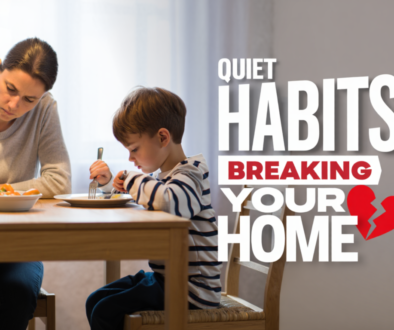

The Quiet Things That Make a Family Feel Safe
You think you’re doing everything right… but you’re still tired.
You wake up already thinking about what needs to be done. Meals, work, messages, chores, keeping everyone okay. You try to stay patient. You remind yourself to be calm. You tell yourself, “I’m doing my best.”
And you are. But there’s a kind of tired that sleep doesn’t fix. It’s the kind that comes from holding everything together while quietly wondering why it still feels… fragile. Like one wrong tone, one bad day, one small argument could tip the mood of the whole house.
I remember one night—nothing dramatic happened. No big fight. Just a long day. Someone left dishes in the sink, someone else snapped back, and suddenly the whole room felt tight. No one was yelling, but no one was relaxed either. We all just… scattered. Different corners. Different screens. Same silence.
That’s when it hit me. It’s not always the big things that shape a home. It’s the small moments where people either soften… or shut down.
And most of those moments are so quiet, you don’t even notice them happening.
What “Feeling Safe” Really Means (In Real Life)
Forget complicated definitions. Feeling safe at home is more like this: You don’t rehearse what you’re about to say. You don’t check someone’s mood before asking a simple question. You don’t feel embarrassed for having a bad day. You don’t feel like you have to earn your place.
It’s the difference between walking into a room and exhaling… versus walking in and bracing, even just a little. I didn’t realize how much that mattered until I experienced both.
There were homes I visited growing up where everything looked nice—but no one interrupted the dad when he was speaking. Kids sat “properly.” Conversations felt… careful.
And then there were homes where things were louder, messier, not perfect—but people leaned on each other, interrupted, laughed mid-sentence, and no one seemed afraid of saying the wrong thing. Guess which one felt safer?
1. The Reaction You Don’t Think About
There’s this moment that happens so fast you barely notice it. Something goes wrong. A spill. A mistake. A forgotten task.
And then—your reaction. I used to think what mattered was teaching the lesson. Correcting the behavior. Making sure it didn’t happen again.
But what I didn’t see at first was the split-second look on someone’s face right before I responded. That pause. That brace. That’s where safety lives or disappears.
One time, someone in the house broke a glass. It wasn’t a big deal. But the way they immediately said, “Sorry, sorry, sorry,” before I even reacted—it felt off.
Like they weren’t reacting to the glass. They were reacting to me. That stayed with me.
Now, I try—”try”, not always succeed—to slow that moment down. A simple, “It’s okay, let’s clean it up,” may help more than a lecture ever could.
2. Tone: The Thing You Only Notice When It’s Wrong
I used to think I was being “clear.” Direct. Straightforward. Efficient. But clarity without softness can feel like pressure.
There was a phase where I kept asking, “What happened?” whenever something went wrong.
Same words. Every time. But one day someone said, “Why do you sound mad even when you’re not?”
That stung a bit. Because I wasn’t mad. I was just tired. But tired has a tone. And that tone may make people feel like they’re in trouble—even when they’re not.
Now I catch myself sometimes and restart. Same question, different voice: “Hey… what happened?” It sounds small. It is small. But it may help the whole moment feel different.
3. Knowing You Can Come Back
This one took me longer to understand. In some homes, once things go wrong, they stay wrong for a while. People stop talking. Keep distance. Wait for time to pass instead of fixing it. I used to do that too.
Let things cool down. Avoid awkwardness. Pretend it’s fine later. But what that actually does is stretch the distance.
I remember sitting in the same room as someone after a disagreement, both of us on our phones, both pretending everything was okay—but it wasn’t. And we both knew it.
What changed things wasn’t a big conversation. It was a quiet, slightly awkward: “Hey… are we okay?” That one question may help more than hours of silence ever could.
4. The Kind of Routines No One Talks About
We always hear about routines like schedules and productivity. But the routines that create safety are simpler. Like knowing someone will ask, “Did you eat?” Or hearing the same “Goodnight” every evening Or that one random habit—like sitting in the same spot during weekends
These things don’t look important. But when they’re missing, you feel it. There was a time when everything got busy. Meals were random. Conversations were quick. Everyone was just… passing through.
No one planned it that way. It just happened. And the house felt different. Not broken. Just… disconnected. Bringing back even one small routine—a shared meal, even if it was short—may help bring back that sense of grounding.
5. Being Seen Without Feeling Picked Apart
I used to correct things quickly. Fix grammar. Fix behavior. Fix tone. It came from a good place—but it didn’t always land that way.
One day, someone said something slightly wrong. I corrected it immediately. And they just went quiet. Didn’t argue. Didn’t react. Just… stopped talking. That moment felt heavier than any argument.
Because it wasn’t about being right. It was about how it felt to be corrected “all the time”.
Now I ask myself: “Does this need to be corrected right now?”
Sometimes the answer is yes. But sometimes… letting it pass may help more.
6. The Words That Stick Longer Than You Think
There are phrases you forget saying. But other people don’t forget hearing them.
“You always do this.” “What’s wrong with you?”
These come out easily when you’re frustrated. But they don’t land as momentary—they land as identity. I still remember a comment someone made to me years ago. They probably forgot it the next day.
I didn’t. That’s the thing about words inside a home. They echo longer.
Switching to: “That didn’t work—let’s fix it,” may help keep the moment from becoming something heavier.
7. Being Known in Small Ways
This is one of the quietest forms of safety. And honestly, one of the most meaningful. It’s not about big gestures.
It’s when someone: Hands you something without asking because they know you need it. Leaves you alone when you’re overwhelmed without making it a big deal. Remembers something small you mentioned weeks ago.
I once had a day where everything felt off. I didn’t say much. Later, someone just placed food next to me and said, “You didn’t eat earlier.”
That was it. No lecture. No questions. That moment felt… safe.
8. Repairing the Moments You Wish You Could Take Back
You will mess up. I still do. Raise your voice. Say something too fast. React without thinking. That doesn’t disqualify you from creating a safe home.
What matters more is going back. Not with a long explanation. Just something real: “Hey… I didn’t handle that well.”
The first few times feel awkward. Almost unnatural. But over time, it may help normalize something important: You don’t have to be perfect to be trusted.
9. Letting People Have Space Without Taking It Personally
This one is hard. Because silence can feel like rejection. But not all silence is distance. Sometimes, people just need time.
I used to follow up quickly: What’s wrong? Why are you quiet?
Trying to fix it immediately. But I learned that giving space—real space—may help more than pushing for answers.
Now sometimes I just say: “I’m here if you need me.” And leave it there.
10. Laughter That Feels Good After
There’s a difference between laughing together and laughing at someone. It’s easy to miss that line, especially in close families. I’ve seen jokes that seemed harmless—but the person being joked about went quiet afterward.
That’s usually the sign. Now I pay attention to what happens after the laugh.
Do people stay engaged? Or do they withdraw? That may tell you everything.
11. Allowing Bad Days Without Turning Them Into Problems
Not every mood needs to be fixed. I used to take it personally when someone came home quiet or irritable. Like it was something I needed to solve. But sometimes, it’s just a long day.
Now, instead of asking, “What’s wrong?” in a heavy way, I go with:
“Rough day?”
It opens the door without pushing. And sometimes, that’s enough.
12. Just Being There (Without Doing Anything)
Some of the most real moments don’t involve talking at all. Scrolling in the same room. Watching something without really watching it. No pressure. No expectation. I didn’t always value those moments.
Now I do. Because they may help people feel connected… without effort.
13. The Small Promises You Don’t Realize You’re Making
“I’ll be there. We’ll do it later.” These feel small when you say them. But they build patterns.
I’ve caught myself saying things like that just to move the moment along. Then forgetting. And slowly, you notice people stop asking.
That’s the real cost. Now I try to say fewer things—but mean them. Or at least admit when I didn’t follow through.
14. Safety Is Not the Same as Control
There was a time I thought having everything “in order” meant things were okay. Rules followed. No mess. No chaos. But control doesn’t always equal comfort.
Sometimes it creates quiet pressure. Real safety may look messier: Different opinions. Mistakes happening openly. Conversations that aren’t perfectly structured. But people breathe easier in that kind of space.
15. These Small Things Change the Whole Feel of a Home
None of these will make a dramatic difference overnight. That’s the honest part. But over time, they may help shift something subtle:
The tension lowers. The reactions soften. The silence feels less heavy. And one day, you notice something small.
People stay in the same room a little longer. They talk a little more freely. They don’t rush away after conversations.
That’s when you know something is working.
If This Feels Hard
If you didn’t grow up in a home that felt safe, this won’t feel natural at first. It might even feel uncomfortable. Like you’re second-guessing yourself. That’s normal.
You’re not trying to be perfect. You’re just trying something different. Start small.
One softer tone. One paused reaction. One honest apology. That’s enough.
My Final Thought
The quiet things don’t get recognized. No one claps for them. No one points them out.
But everyone feels them. And sometimes, the biggest sign that something is working isn’t what people say— It’s what they no longer have to protect themselves from. “Which one surprised you?”