
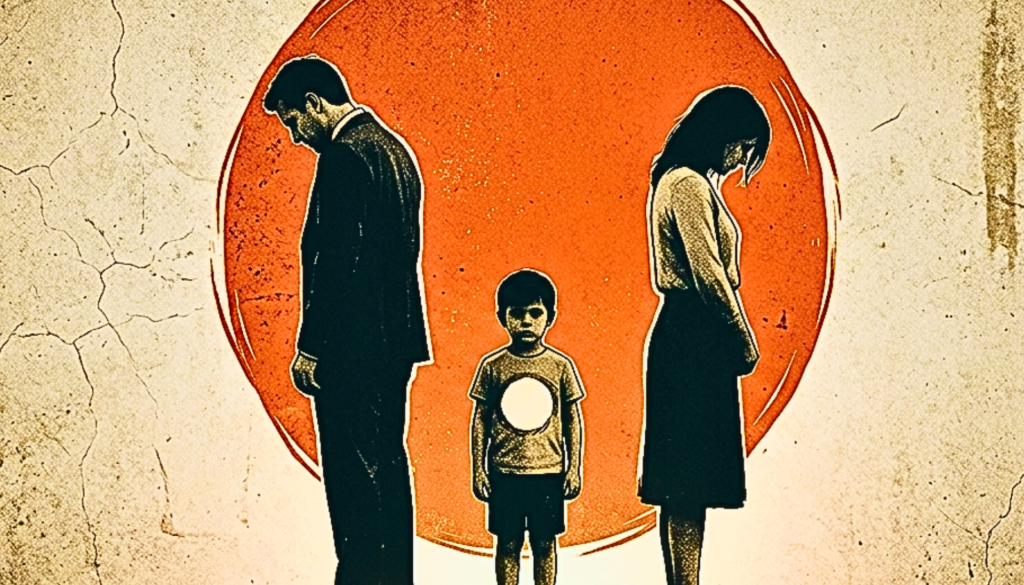
How to Heal Emotional Distance Between Parent and Child
(The Truth of What This Is Actually Like and How to Come Back Together Again)
The Point at Which It Clicks With You That There’s Something Wrong.
This isn’t an emotional cliff-hanger. There is no huge confrontation, yelling match, or turning point where everything changes. It’s much simpler.
For example, when you ask your kid how their day went, and all they reply is “good,” and for the very first time, you don’t ask anything further afterwards. Or you sit in the room together, both of you on our phones,
and only then do you notice— We haven’t spoken in days now.
We haven’t actually communicated. And then a realization comes slowly, like an incomplete thought,
asking silently, “When did we lose this connection?”
The Kind of Distance That Doesn’t Look Like a Problem (At First)
It comes down to this. To outsiders, all is well. They’re coping alright at school. You are giving them everything they need. There are no huge fights.
Therefore, you think to yourself, “This will pass soon.” But internally, everything seems … not quite right.
You begin to notice things you hadn’t seen before: They stop coming to you first. You get to know what is happening later in their life than you should, or from others. Communication is more about duty than connection.
And if you really reflect on this, there is a sadness associated with it. Subtle. Subdued. A sorrow that lingers over missing someone right in front of you.
A Truth That’s Hard to Admit (But Matters)
Not every emotional distance is a result of one large problem. They are often formed due to little experiences such as: When you couldn’t pay attention because of fatigue. When you preferred correcting rather than listening. When they tried talking… but it did not mean anything to you.
There is nothing that breaks the bond. Except when all of these things come together. Then your child comes to one conclusion that you may never even suspect: “Perhaps it’s best to keep quiet.” Just by thinking this, more distance than any quarrel might be created.
The Experience of Emotional Distance (From the Inside)
Not everyone gets into the nitty-gritty on this topic. However, this is very much real.
It is like: Staying outside your child’s world and not knowing how to find a way in. Desiring to ask more probing questions but not knowing how without causing a scene. Reflecting on previous exchanges, pondering if there was anything you should have known but didn’t. Getting a feeling of rejection even though they may not necessarily mean it
There can be feelings of guilt added in: Was it my fault? Have I been too controlling? Have I been negligent?
These thoughts might remain unspoken. But they linger nonetheless.
Shift of Paradigm: The One Thing That Makes All the Difference
Typically, parents attempt to close the gap through increased: Advice-giving, Question-asking, Serious talks.
However, here is what really makes the difference—although not in the ways most people think: Stop trying to control the bond… and make it safe instead. It’s that simple.
Not louder. Not stricter. Not more intense. Just safer.
What “Safety” Really Means in Practice
It’s not a flawless method of parenting. It’s subtle, often imperceptible shifts.
1. You No Longer Overreact
There comes a time when your kid says something that would typically set you off. Perhaps they have an opinion you don’t share. Or they make a statement that makes you feel anxious.
Instead of reacting right away… You wait. Not out of indifference—but from a place of empathy. Your hesitation is far more meaningful than you realize.
2. You Allow Conversations to Remain Incomplete
Before, you may have said:
“Explain yourself.”
“Why do you think that?”
“That does not make sense.”
Now, you give room. If they speak one sentence… you don’t ask for five more. For connection does not come from force; it comes from room.
3. You Arrive Unprepared
This is where the shift occurs. You sit next to them—not to lecture, not to speak—just to be present. They might be browsing, or gaming, or anything else.
You don’t interrupt. It seems meaningless at first. Until one day, they randomly say something like: “This level is so difficult.”
It’s not profound. It’s not significant. But it’s something. And you don’t use that as a teaching opportunity…
you simply react as a human being. This is how it begins.
An Apology That Every Parent Has a Hard Time Giving
There comes a time in your life, if you are honest with yourself, when you come to understand:
It needs to be said. In no great dramatic way. But rather, simply and honestly.
Something like: “I believe I’ve not been listening much. It never occurred to me until just now.” Honesty like this is hard.
It strips away the “I’m a parent and therefore right” attitude. But it does one incredible thing: It lets your child know “It’s okay to have feelings—about me.”
The Awkward Phase Nobody Told You About
Once you begin making an effort to rebuild your connection, it will not initially seem natural.
It will feel like: You are putting more effort into the relationship than they are. Conversations are still brief. Nothing much seems to be happening.
This is the stage where most people throw in the towel. As it feels like rejection.
What is really going on is that: They are observing. Perhaps unconsciously.
But they see: Can you be patient? Can you remain calm? Will you revert to your old self?
Trust cannot be regained by words. Trust is gained through patterns.
The Truth Revealed in a Real Moment
One parent recounted their experience like this: “I gave up trying to coax any information out of my daughter and just sat down next to her every evening while she used her cell phone. No strings attached. No questions.”
And nothing for weeks. Until one evening when, out of the blue, she blurted out: “Something happened at school today.”
That’s all there was. Nothing in terms of building up to anything. Nothing as far as ‘we need to talk’.
Just a real moment that presented itself because the place had become secure enough. Such is the reality of reconnecting.”
Things That You Need To Let Go Of
This one is tough. In order to reconnect, you might have to let go of: Always needing to be right. Always needing to fix things right away. Expecting your child to react in a certain way. Your version of the old relationship.
Sometimes, healing doesn’t mean going back. It means moving forward and building something different—something more authentic.
What Endures (Even If Everything Else Is Broken)
This is what they never tell you: Even if there is separation… Even if communication is difficult… Even if it’s been months of silence or struggle…
The relationship does not die. It merely lies dormant beneath: Mistimed moments, Unspoken emotions, Misinterpreted motives. Those things – despite their pain – are temporary.
If You’re Feeling This Right Now: If you’re reading this and saying to yourself, “This is exactly how things are between me and my kid…”
That’s a good sign in itself. Because being aware is all that matters. Not trying to do everything right. Not having an emotional breakthrough.
Just starting where you are: Being a bit more patient. Listening a bit more. Reacting a bit less.
Over time, even these small steps will take you somewhere greater than a “perfect conversation.”
The One That Remains
There is no easy solution to repair broken emotional connections. There is no exact science involved. Yet there is one undeniable fact:
Kids don’t require flawless parents to restore communication. They just need accessible ones.
Even if it feels uncomfortable. Even if it takes time. Even if you’re uncertain that you’re doing it correctly. Being present in their life regularly, that is all it takes to win people over.
Making It Real
If you have ever experienced this kind of disconnection, whether from the parent’s side or even as the child, How did it make you feel?
And if you find yourself there right now, What is something that you would be willing to do differently?
Sometimes healing does not begin with a big step. It begins with a small step.