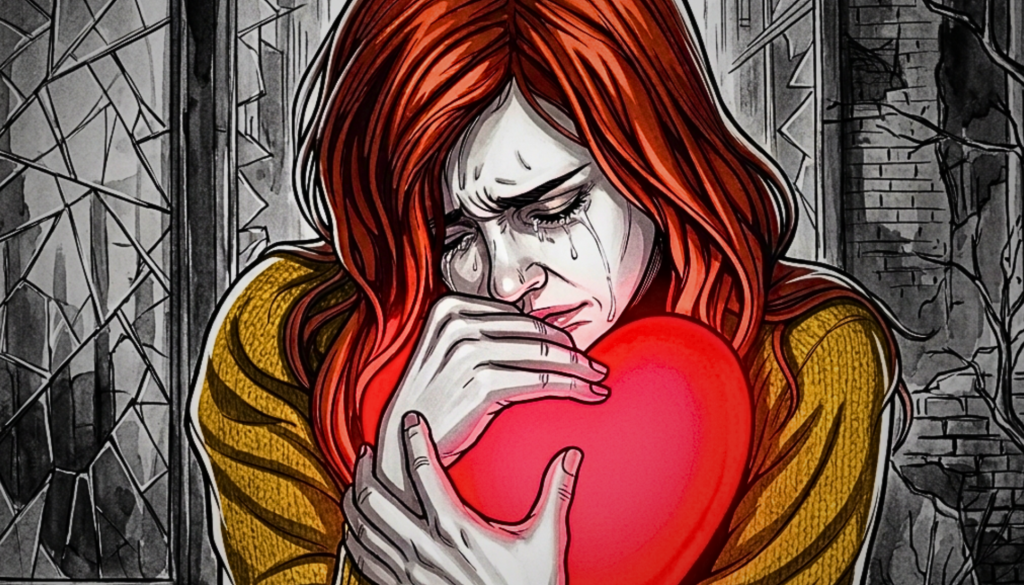
I Thought I Understood Love But I Was Just Repeating Old Patterns
A True Story of Attachment, Relationship Cycles, and the Bitter Reality Behind Our Repetitive Choices
Here’s what you need to know about this post upfront: It’s not written from the perspective of a professional. It comes from firsthand experience that only became clear after repetition.
I’m no psychologist, but I’ve been studying my own relationship tendencies, researching theories of attachment and behaviors, and observing how it all plays out in reality for years now. This post is both a story and an explanation of repetitive relationship cycles.
If you’ve ever wondered why: You attract the same type of partner time and again. Love feels exciting at first… then draining. You suddenly lose interest when everything seems perfect.
Then I’m not the only one who can identify with your question.
The Pattern That Eluded Me (Despite Its Obviousness)
In retrospect, the breakdown of my relationships wasn’t happenstance. There was a pattern. Not necessarily the exact same individuals—but definitely the same emotional process:
High-level early connection. Underlying inconsistencies. Me attempting to “figure things out”. Greater and greater emotional involvement on my part. Confusion, rumination, and finally burnout.
To me, it seemed like: “This is just what dating is like nowadays.” However, that can only be true if the cycle is consistent.
One Specific Event That Made Me Look at Attraction Differently
It’s just one specific night that comes to mind. There was no drama, nothing serious, not even an argument or a break-up. I just sat there, holding my phone, waiting for something easy.
But time went by and I realized how uncomfortable I felt: I wasn’t just waiting for a reply. I was anxiously watching out for it. Reading messages, analyzing tones, interpreting silences. And then it clicked.
Why did this feeling seem so familiar? Not only when dating but beyond it?
The act of waiting, adjusting, trying to remain “in sync” with someone else emotionally. It seemed so familiar because… It was something I learned well before entering any romantic relationship.
The Psychology Behind It: If you’ve ever heard about attachment styles—you’ll be able to piece this together now.
Principles derived from attachment theory (formulated by John Bowlby and further studied by scientists such as Mary Ainsworth) provide insight into how our early emotions affect our relationships with others as adults.
And here’s what almost no blog post mentions: Understanding your attachment style does not equate to action.
I was aware of the terminology. “Anxious attachment,” “emotional availability,” “validation-seeking.” But I was still attracted to individuals who brought out these traits. Because knowledge that isn’t followed by disruption equals repetition.
What “Repeating Old Patterns in Love” Really Means (In Practice)
A term that gets used all the time, here’s what it actually meant in my life:
1. Mistaking unpredictability for attraction: The erratic people intrigued me. The predictable ones confused me.
2. Misinterpreting passion for significance: Fast-burning emotion = serious.
3. Disregarding initial uneasiness: Not warnings—but small signs of misalignment.
4. Staying in the name of future possibility: I wasn’t seeing them for who they were. I was seeing them for who they would become.
5. Owning the connection: If it didn’t seem right, I was responsible for making it work.
You don’t see them when you’re in them. They take effort. They take dedication. They take love.
A Change That Really Matters
Before (My Idea of What Love Is)
- Something that demands your constant effort.
- Something that needs lots of patience and understanding
Something very passionate and overwhelming. - Something you cannot walk away from that easily.
After (What I Have Learned So Far)
- There is no need to read emotions in love.
- Joint effort seems to be different from individual effort.
- Being calm doesn’t imply being boring—no, it implies being consistent.
- Leaving early sometimes is better than staying loyal to something toxic
This change did not come out of nowhere. It has come from exhaustion.
Real Case Example: One That Isn’t My Own But Close Enough To Mention
There was someone in my life, “A,” who experienced the same cycle as well, only with a different personality. Same pattern but different individual. They continued to date individuals who were “almost perfect.”
Almost prepared. Almost dependable. Almost reliable. But then, at some point in their lives, they decided to ask themselves not, “Do I like this person?”
But rather, “Am I emotionally secure around this person?”
This single shift made all the difference. Why? Because it stripped away the façade of chemistry and replaced it with genuine emotions. How did their next relationship go? More boring from the beginning. But less complicated in the end.
The Difficult Realization
Not all my relationships were solely dependent on the other person involved. The feeling that the relationship gave me was a significant factor. Needed, Selected (when everything was well), Valued. Even when it was inconsistent.
And that’s the tough realization: Sometimes we remain in dysfunctional behavior because it satisfies our emotional requirements, even if we can’t articulate why.
What Really Got Me Out of the Cycle (Not Just Understanding It)
These are where tips start sounding too good to be true. “Just make different choices. Just learn to set boundaries.”
Sounds easy—unless you’re emotional. These are things that really helped, but imperfectly:
1. Stopping fast attraction: If it was going somewhere quickly, I treated that as reason enough to stop, not move forward.
2. Noticing patterns, not promises: Long-term consistency mattered more than potential.
3. Allowing space for silence: Learning to let some silences happen made a big difference.
4. Considering the emotional hangover: Not my feelings during, but my feelings afterward. Peaceful? Or nervous? It makes a difference.
5. Knowing “healthy” can mean uncomfortable: But still healthier.
An Important Secret (And It Applies to Love Too!)
It may seem completely irrelevant, but it isn’t. When it comes to SEO, consistency is better than spiking. A site that is consistent in performance will rank higher than a site that experiences peaks and valleys. Relationships are the same.
Consistency creates trust. Unpredictability attracts attention—just not security. And I had confused attention with connection.
The Question that Changed My Approach to Dating
Previously, I would ask myself questions like: “Do they like me?”
Nowadays, my question is: “Is this dynamic healthy for me?”
Attraction is instantaneous. However, compatibility takes a while.
Mistakes I Continue Making (Since This Story Doesn’t End With Me Finding the One)
On occasiom, I still: Find myself attracted to emotionally unattached individuals. Overthinking a normal situation. Pining for things that didn’t happen. Doubting healthy relationships.
The only difference? I don’t act on them automatically. Just because I know it doesn’t mean I can stop doing it.
How Love Feels Nowadays (Or How I’m Coming To Know It)
It’s not all-consuming. It’s not about something that I have to continually keep safe.
Instead, it’s: Having the ability to concentrate on myself without worrying. Not having to work out the meanings behind everything. Knowing that I’ve been chosen without requiring proof. Believing in continuity, rather than intensity.
If I’m going to be completely honest? At one point, it was foreign enough to me that I almost left it behind. I couldn’t figure out how it was love.
If You Recognize Yourself Here.
You don’t have to get all better right away. First comes awareness. Then disruption. Then change.
Asks yourself: What cycles keep on cycling? What is familiar—but exhausting? What is foreign—but soothing?
And above all else: Are you picking the right people—or are you stuck in patterns?
Last Thought (The One That Really Counts)
I didn’t misinterpret love. I misinterpreted familiarity. And there is a big difference.
Since sometimes, natural isn’t always good. Especially when it’s just the cycle I know best. And breaking myself free from that one?
It takes longer than I thought. But it happens. And for the first time, it feels like love isn’t something I react to anymore— But something I actively choose.